
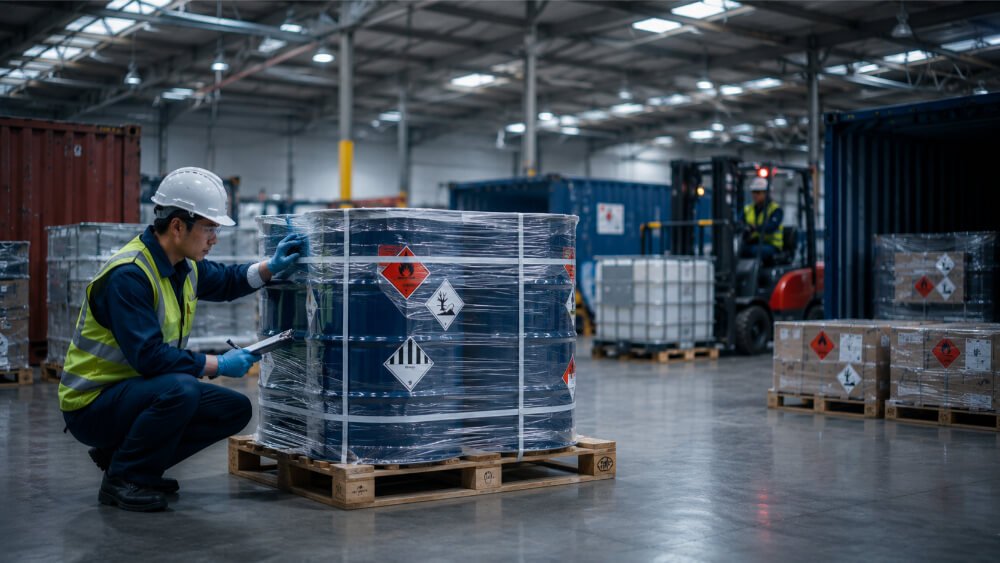
Shipping dangerous goods (DG) cargo comes with a different set of rules than standard freight. Getting classification, documentation, or handling wrong doesn’t just risk delays — it can risk safety and compliance. Here’s what businesses shipping dangerous goods should understand before booking a shipment.
What Counts as Dangerous Goods Cargo?
Dangerous goods cover a wide range of materials, including flammable liquids, corrosives, oxidizers, compressed gases, and certain batteries or chemicals. Many products that seem ordinary — aerosols, cleaning agents, lithium batteries, certain cosmetics — can fall under DG classification depending on their composition and concentration.
The IMDG and IATA DGR Classifications
Sea freight dangerous goods are governed by the IMDG (International Maritime Dangerous Goods) Code, while air freight dangerous goods follow IATA’s DGR (Dangerous Goods Regulations). Both systems classify materials into hazard classes — from explosives to miscellaneous hazardous substances — and each class carries specific packaging, labeling, and stowage requirements.
Documentation and Packaging Requirements
- Dangerous Goods Declaration (DGD) — a mandatory shipping document identifying the hazard class and handling instructions.
- UN-certified packaging — packaging tested and approved for the specific hazard class being shipped.
- Correct labeling and placarding — hazard labels must match the exact classification of the cargo.
- Safety Data Sheets (SDS) — often required to confirm the material’s properties and handling precautions.
Why Working With an Experienced Forwarder Matters
Regulations for dangerous goods shipping are strict and vary by carrier, route, and destination country. A forwarder experienced in DG cargo helps verify classification, prepare compliant documentation, and coordinate handling that meets safety requirements — reducing the risk of rejected shipments or compliance issues at port.
PEX Logistics supports businesses shipping Dangerous Cargo with the documentation and handling coordination these shipments require. Learn more about our Dangerous Cargo service or talk to our team about your shipment’s classification.